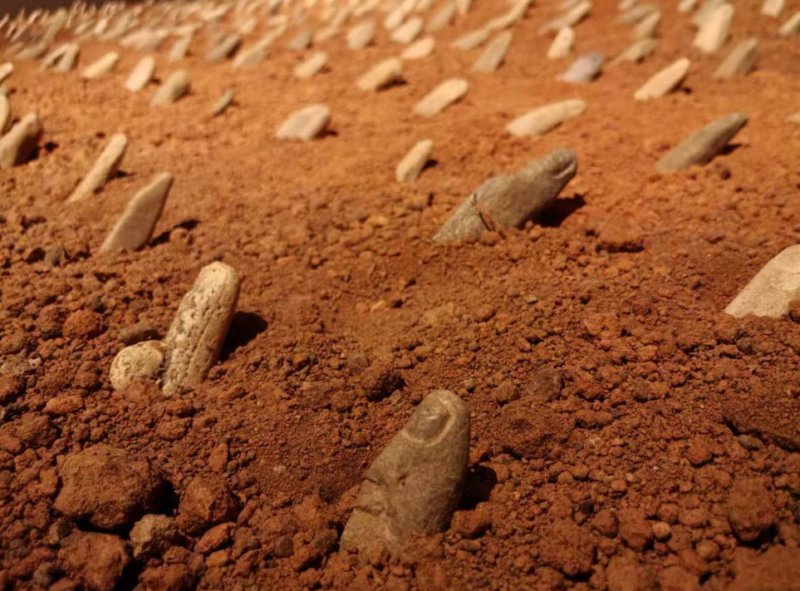


When you wander through major art Museums in China and encounter installations, performance art, or abstract paintings that challenge traditional aesthetic boundaries, you have stepped into the narrative realm of Chinese avant-garde art. Far from a mere replica of Western artistic paradigms, Chinese avant-garde exhibitions are rooted in the soil of epochal changes, forging a uniquely Chinese artistic expression system amid the collision of tradition and modernity, local and foreign influences—serving as a crucial window into the spiritual world of contemporary China.
![图片[1]-Chinese Avant-Garde Exhibitions: A Fusion of Traditional and Contemporary Art for Global Visitors](https://www.dgcity.com/wp-content/uploads/2026/01/image-91.png)
The germination and bloom of Chinese avant-garde art have always resonated with the tide of China’s reform and opening-up. In the 1980s, as the spring breeze of ideological emancipation swept across the country, a group of young artists broke free from the constraints of traditional fine arts and embarked on the exploration of avant-garde art with bold experimental spirit. Two important exhibitions in Shanghai in late 1986 marked a climax of avant-garde art discussions in the city that decade: “Concave and Convex Exhibition” held at Xuhui District Cultural Center, which expressed confusion, sarcasm, and challenges towards the modern environment through highly personalized approaches without a unified stylistic direction; and “M Conceptual Art Performance Exhibition” staged at Hongkou No.2 Workers’ Cultural Palace in December, creating the most radical performance scenes in Shanghai’s 1980s avant-garde practice.
More than 200 audiences witnessed a dozen artists presenting works through performances or mime-like expressions. The one-hour event reached its peak with Yang Xu’s self-mutilating performance—naked, he jumped wildly as he was struck with seven-star needles until his back was covered in blood. Another landmark was the “Second Concave and Convex Exhibition: The Last Supper” in 1988 at Shanghai Art Museum. Artists built a 33-meter-long corridor with moso bamboo and linen leading to a long table adorned with cola and food. Eleven artists, wearing hoods and custom robes, filed in and sat around the table. Unfortunately, the performance was halted after 20 minutes due to fire safety concerns, making its opening also its closing. Yet, this work encapsulated the core elements of 1980s avant-garde art, including enthusiasm for major philosophical propositions, admiration for religious spirit, and the pursuit of discourse power.
![图片[2]-Chinese Avant-Garde Exhibitions: A Fusion of Traditional and Contemporary Art for Global Visitors](https://www.dgcity.com/wp-content/uploads/2026/01/image-92.png)
Over decades, Chinese avant-garde exhibitions have transcended mere rebellion to form a diverse and coexistent ecosystem. From early learning from Western modern art to today’s in-depth return to local Culture and innovative use of technological means, avant-garde art has always maintained a keen perception of the times. In today’s exhibitions, you can see Shi Jinsong’s “Cold Weapons” series, sharp artifacts made of synthetic steel reflecting on power and civilization through cold luster; or Yang Fudong’s black-and-white video “Seven Intellectuals in Bamboo Forest,” using symbols of Wei-Jin scholars to metaphor the spiritual predicament of contemporary people. Experimental ink painting integrates traditional brushwork with abstract expression, multimedia works reconstruct sensory experiences through digital technology, and performance art focuses more on dialogue with social reality—each form conveys Chinese artists’ understanding of self and the world.
For international visitors, Chinese avant-garde exhibitions are a feast of cross-cultural dialogue. These works embody both the traditional gene of “literature serving morality” and universal reflections in the global context—Shen Shaomin’s “Unknown Creatures” explores the form of life, while Chen Man and Zhang Dan’s photography work “Preferences” strikes a chord with metaphors of desire in the digital age. In recent years, exhibitions such as the Wen Pulin Archive of Chinese Avant-Garde Art at Beijing Red Brick Art Museum and avant-garde sections in Shanghai Biennale have become important platforms for Sino-foreign artistic exchange, allowing audiences from around the world to understand China’s social changes and spiritual leap through immersive experiences.
Appreciating Chinese avant-garde exhibitions requires no adherence to fixed interpretation frameworks. It may be obscure and sharp, yet it always sincerely touches the pulse of the times. When you pause before these works, you feel not only the innovation of artistic forms but also a nation’s thinking, confusion, and pursuit during a period of transformation. This is the unique charm of Chinese avant-garde exhibitions—building a bridge with art, enabling people from different cultural backgrounds to find spiritual resonance in boundary-breaking expressions.


暂无评论内容