

Jade has always occupied a unique position in Chinese Culture. It is not only a warm and translucent natural treasure but also embodies the ancient Chinese pursuit of virtues such as benevolence, righteousness, wisdom, courage, and purity. Chinese jade carving, a traditional craft that perfectly integrates the beauty of nature with humanistic charm, has been passed down for thousands of years and has long become an indispensable part of the cultural genes of the Chinese nation, attracting countless foreign tourists to explore the millennium-old stories behind it.
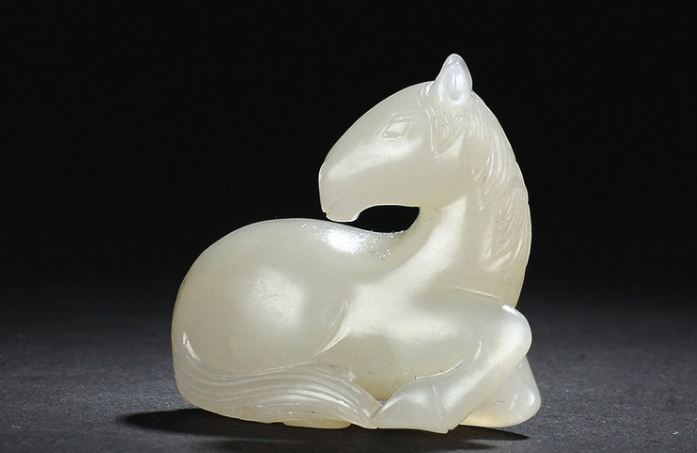
The history of Chinese jade carving dates back to the Neolithic Age, more than 8,000 years ago. From the jade cong (square tubes with circular holes) and jade bi (circular discs) of the Liangzhu Culture in Zhejiang Province to the jade dragons and jade ge (dagger-axes) of the Yin Ruins in Anyang, Henan Province, early jade carvings already showed exquisite craftsmanship and strong religious and sacrificial colors. At that time, ancient people carved jade with simple tools, integrating their awe of nature and reverence for ancestors into each work, making jade carvings an important carrier for communicating with heaven and earth and highlighting social hierarchy. During the Shang and Zhou dynasties, jade carving craftsmanship gradually matured, with more complex patterns. Dragons, phoenixes, taotie (a mythical beast) and other motifs became mainstream, reflecting the aesthetic fashion of the time and hiding strict social rituals.
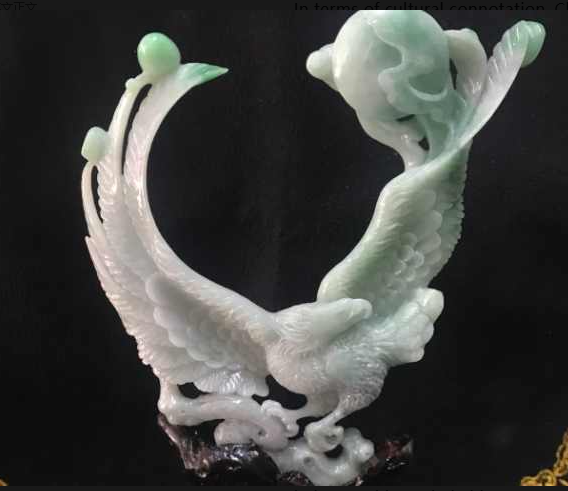
The Qin and Han dynasties witnessed the first heyday of jade carving. The “Han Eight Knives” technique emerged, outlining the vivid beauty of jade with concise and smooth lines. Jade cicadas and jade holds, used as burial artifacts, became characteristics of the era, demonstrating the ancient people’s understanding of life and death. During the Wei, Jin, Southern and Northern Dynasties, influenced by metaphysics, the style of jade carving tended to be simple and ethereal, with themes mostly focusing on landscapes and figures, adding the aesthetic taste of literati and scholars. In the Tang and Song dynasties, economic prosperity drove the further development of jade carving craftsmanship. Secular themes increased, and patterns such as flowers, birds, and auspicious beasts were close to life. Jade carvings were no longer limited to the royal family and nobles but began to enter ordinary people’s homes as works of art decorating life.
The Ming and Qing dynasties were the peak period of Chinese jade carving, with craftsmanship reaching perfection. The Ming Dynasty’s “Lu Zigang” jade carving was famous for its meticulousness and profound artistic conception, integrating calligraphy, painting and other arts into jade carving and creating a new style of integrating poetry, calligraphy, painting and seals. The court jade carving of the Qing Dynasty gathered the essence of craftsmanship from all over the country, using high-quality materials and complex techniques. From huge jade mountains to small jade pendants, each work showed extreme luxury and sophistication. Among them, the jade mountain “Yu the Great Taming the Flood” is known as the “King of Jade Carvings” and has become a classic handed down from generation to generation.
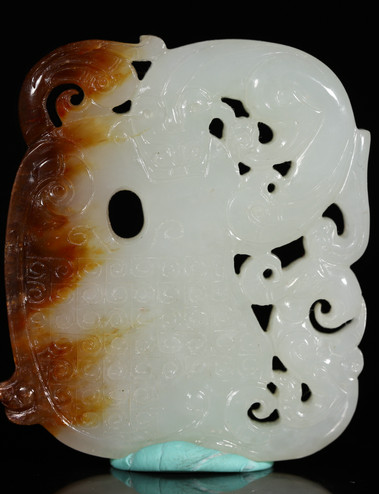
The charm of Chinese jade carving lies not only in its long history but also in its unique craftsmanship and profound cultural connotation. The selection of jade for carving is extremely strict. Hetian jade, jadeite, Dushan jade, Xiu jade, etc., are commonly used materials. Among them, Hetian jade is regarded as a treasure in jade carving due to its warm texture and pure color. The carving process is cumbersome and complex. From material selection, design, cutting, polishing to finishing, each link tests the craftsman’s patience and skills. “Observing jade” is the first step in jade carving. Craftsmen need to conceive and design according to the natural texture, color and shape of the jade, achieving “carving according to the material” to make the beauty of nature and the ingenuity of man complement each other.
In terms of cultural connotation, Chinese jade carving fully demonstrates the essence of traditional Culture. Dragons and phoenixes symbolize auspiciousness and dignity, peonies represent wealth and good fortune, lotus flowers imply purity and elegance, while bats and gourds have become common auspicious patterns because their pronunciations are homophonic with “blessing” and “emoluments” in Chinese. Each jade carving work is not a simple utensil but a sustenance of the craftsman’s emotions and a inheritance of culture, carrying the Chinese people’s yearning and pursuit for a better life.
Today, traditional jade carving craftsmanship is constantly innovating while being inherited. Young craftsmen adhere to ancient techniques and integrate modern design concepts, breathing new life into the millennium-old jade carving. From the handed-down treasures in Museums to the creative works in the market, Chinese jade carving has always shown the wisdom and aesthetics of the Chinese nation to the world with its unique charm. For foreign tourists, exploring Chinese jade carving is not only appreciating a work of art but also going deep into Chinese culture and feeling the warmth and depth that span thousands of years.








暂无评论内容