

Amidst the splendid traditional Culture of China, seal carving stands out with its unique charm of “containing a vast world in a tiny space”. Having gone through thousands of years of trials and tribulations, it has become increasingly brilliant. Not only is it a comprehensive art integrating calligraphy, painting and sculpture, but also a cultural symbol carrying Chinese context and embodying the wisdom and aesthetic pursuit of the ancients. Listed in the national intangible cultural heritage list, it has become a timeless artistic treasure.
![图片[1]-Chinese Seal Carving - Traditional Intangible Cultural Heritage Art](https://www.dgcity.com/wp-content/uploads/2026/01/image-81.png)
The origin of seal carving can be traced back to the pre-Qin period, initially serving practical purposes. At that time, seals were called “xi”, symbols of power, identity and credit, mainly used by emperors, dukes, princes and officials. Made mainly of bronze, they were crafted through casting. Oracle bone inscriptions and bronze inscriptions of the Shang and Zhou dynasties laid the foundation for the characters in seal carving. Early seals featured rigorous character layout and simple lines, embodying a primitive aesthetic ideology despite their simple shapes.
![图片[2]-Chinese Seal Carving - Traditional Intangible Cultural Heritage Art](https://www.dgcity.com/wp-content/uploads/2026/01/image-82.png)
The Qin and Han dynasties marked the first golden age of seal carving, known as the “ancient seals of Qin and Han”. After unifying the six kingdoms, the Qin Dynasty implemented the policy of “unifying writing”, with small seal script as the official standard font. Qin seals featured standardized and unified characters, symmetrical and balanced layout, and strong, forceful lines, forming a solemn, elegant and magnificent artistic style. Building on Qin seals, Han seals further developed with more diverse materials including bronze, jade and pottery. The characters incorporated the charm of clerical script, with thick, full strokes and flexible layout, showcasing both the dignity of official seals and the vividness of private seals. This period perfectly integrated practicality and aesthetics, establishing the basic paradigm of Chinese seal carving and exerting a profound influence on later generations.
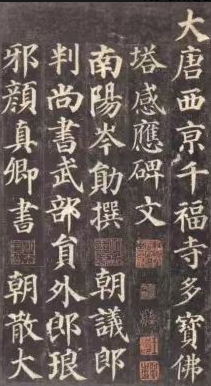
From the Wei, Jin, Southern and Northern Dynasties to the Sui and Tang dynasties, seal carving underwent a period of transformation and development. With the popularization of paper and the prosperity of calligraphy, the application scenarios of seals changed from being stamped on bamboo slips and artifacts to being used on calligraphy and painting works, with their functions shifting towards aesthetics. Seals of this period mostly adopted regular script and running script, featuring an elegant and vivid style that contrasted sharply with the primitive simplicity of Qin and Han ancient seals. Meanwhile, the shapes and knobs of seals became more diverse, and carving techniques continued to improve, laying the foundation for the revival of seal carving after the Song Dynasty.
![图片[3]-Chinese Seal Carving - Traditional Intangible Cultural Heritage Art](https://www.dgcity.com/wp-content/uploads/2026/01/image-83.png)
The Song and Yuan dynasties witnessed a revival of seal carving. Literati began to extensively participate in seal creation, integrating their calligraphy skills and aesthetic tastes, breaking the previous pattern dominated by craftsmen. Song literati advocated the integration of “poetry, calligraphy, painting and seal”, making seals an indispensable part of calligraphy and painting works, serving as embellishments, inscriptions and anti-counterfeiting marks. In the Yuan Dynasty, literati such as Zhao Mengfu and Wang Mian promoted the development of seal carving. Wang Mian pioneered seal carving on flower milk stone; the ease of carving stone allowed literati to directly participate in carving, freeing themselves from dependence on craftsmen and enabling the personalized development of seal carving art.
The Ming and Qing dynasties represented the heyday of seal carving, with numerous schools and famous artists forming a complete artistic system. In the mid-Ming Dynasty, famous artists such as Wen Peng and He Zhen rose to prominence, establishing the status of “literati seal carving”. Wen Peng used Qingtian stone, founding the Wumen School of seal carving with an elegant and graceful style; He Zhen advocated “using a knife as a brush”, emphasizing the expressiveness of knife techniques and laying the foundation for the Huizhou School. After the Qing Dynasty, seal carving schools flourished, including Huizhou School, Zhejiang School, Deng School and Wu School, each with distinct characteristics. Masters such as Deng Shiru, Zhao Zhiqian, Wu Changshuo and Huang Mufu continuously explored in character origin, knife technique innovation and layout breakthrough, pushing seal carving art to new heights. Wu Changshuo incorporated stone drum script into seal carving, with powerful, vigorous lines and well-proportioned layout, perfectly integrating the charm of gold and stone with literary grace, becoming a benchmark figure in modern seal carving art.
![图片[4]-Chinese Seal Carving - Traditional Intangible Cultural Heritage Art](https://www.dgcity.com/wp-content/uploads/2026/01/image-80.png)
The charm of seal carving lies in its pursuit of “form, spirit and meaning”. Creating a seal carving work involves multiple steps including stone selection, conception, drafting, carving and polishing, each testing the creator’s skills and ingenuity. Stone selection is the foundation; commonly used stones include Qingtian stone, Shoushan stone, Changhua stone and Baling stone, each with different textures, colors and grains that directly affect the final effect. Conception and drafting are the core; creators combine calligraphy art with compositional aesthetics, designing character arrangement, density and slant according to the stone’s shape and size, striving to achieve the realm of “painting in characters and meaning in painting”. Carving is the key; knife techniques include chong dao (slashing knife), qie dao (chopping knife) and se dao (rough knife). With knives as brushes, creators control strength and speed to express the texture and rhythm of characters—either forceful, gentle, primitive or vivid. Polishing is the finishing touch, making the edges and surface of the seal more smooth and enhancing the overall texture of the work.
Today, with the development of the times, seal carving has long transcended its traditional practical functions and become an independent art form loved by art enthusiasts at home and abroad. It is not only an important carrier of traditional Chinese Culture but also a bridge for cultural exchanges between China and foreign countries. In various art exhibitions and cultural exchange activities, seal carving works always attract the world’s attention with their unique artistic charm, allowing more people to feel the profoundness of Chinese characters and the unique charm of Chinese aesthetics. In a tiny space, it engraves thousands of years of cultural context and carries national feelings. Chinese seal carving art is shining more brightly in the new era with a brand-new posture.








暂无评论内容