

traditional Chinese philosophical thought is the soul of Chinese civilization, spanning thousands of years and permeating natural landscapes and cultural relics. This guide will lead you to trace these philosophical ideas, touch the wisdom of the ancients while traveling, and make your journey not only about scenery but also about spiritual enrichment.
![图片[1]-Traditional Chinese Philosophy Travel Guide - Confucianism, Taoism & Buddhism Attractions](https://www.dgcity.com/wp-content/uploads/2026/01/909d32fee21e4a03bd828ec4a905b115tplv-be4g95zd3a-image.jpeg)
Confucianism, one of the mainstream Cultures, centers on “benevolence, righteousness, propriety, wisdom, trustworthiness” and “the golden mean”. To explore its roots, Qufu in Shandong Province is a must-visit. The Confucius Temple, Confucius Mansion, and Confucius Cemetery here, collectively known as the “Three Confucian Sites”, are sacred places of Confucian culture. Stepping into the Confucius Temple, the vermilion palace walls stand against the ancient cypresses, and the Dacheng Hall is surrounded by incense, as if you can hear the Teachings of the sages and deeply understand the philosophy of “benevolence is love for others”. In addition, the Imperial Academy in Beijing and Qufu Confucius Temple are known as the dual cores of ancient education and Confucian culture, where you can feel the deep integration of the imperial examination system and Confucian thought, and understand the ideal pursuit of “cultivating oneself, governing the family, managing the state, and pacifying the world”.
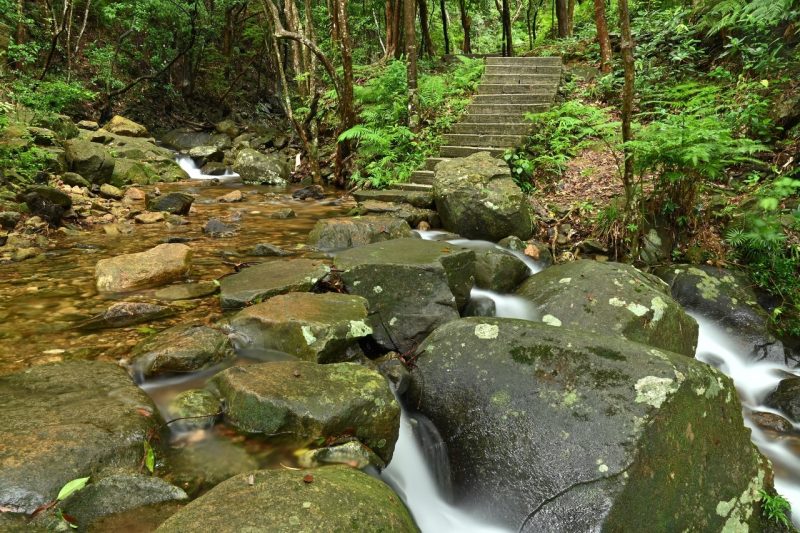
Taoism, with “following nature” and “harmony between man and nature” as its core, pursues the harmonious coexistence of man and nature. Qingcheng Mountain in Sichuan Province is a landmark of Taoist Culture, with green peaks and ancient temples hidden in clouds and mists, known as “the most secluded mountain under heaven”. The Taoist temples on the mountain, such as Shangqing Palace and Jianfu Palace, have cornices curving in line with the mountain terrain, showing the transparency of “governing by non-action”. Standing at the top and looking into the distance, with clouds and mists sweeping over the mountains, you can understand Taoism’s awe and pursuit of the true nature. In addition, Qiyun Mountain in Anhui Province is also one of the four famous Taoist mountains, where stone carvings and Danxia landforms blend, embodying the simple wisdom of “following nature”.
![图片[2]-Traditional Chinese Philosophy Travel Guide - Confucianism, Taoism & Buddhism Attractions](https://www.dgcity.com/wp-content/uploads/2026/01/387e738aa9ae44bdbb6f3cb3ab8d2aa4tplv-be4g95zd3a-image-1024x682.jpeg)
After being introduced to China, Buddhism integrated with local thoughts and formed a unique philosophical system, focusing on “compassion” and “karma”. Wutai Mountain in Shanxi Province, as the top of China’s four famous Buddhist mountains, has a group of temples built along the mountains, with incense lingering for thousands of years. Among them, Xiantong Temple and Tayuan Temple are simple and solemn, with the white pagoda reflecting the blue sky and white clouds, conveying a sense of peace and tranquility. Putuo Mountain in Zhejiang Province is the Taoist temple of Guanyin Bodhisattva, where the sound of waves and scriptures interweave, allowing you to perceive the compassion of “all beings are equal” between mountains and seas and purify your soul.
![图片[3]-Traditional Chinese Philosophy Travel Guide - Confucianism, Taoism & Buddhism Attractions](https://www.dgcity.com/wp-content/uploads/2026/01/947524675238756430tplv-be4g95zd3a-image-1024x682.jpeg)
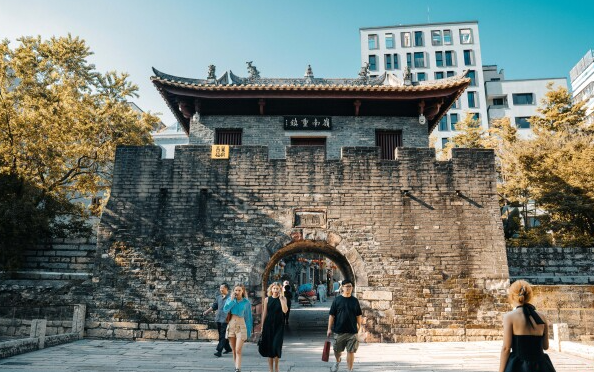
In addition to the three mainstream ideologies of Confucianism, Taoism, and Buddhism, traditional Chinese philosophy also includes diverse schools such as Mohism’s “universal love and non-aggression” and Legalism’s “strict rule of law”. At the White Horse Temple in Luoyang, Henan Province, you can trace the origin of Buddhism’s introduction to China and witness the track of cultural integration. At the Ancient City wall of Xi’an, Shaanxi Province, you can feel the profound influence of Legalism on ancient state governance. Traveling across China, every historical site is a carrier of philosophical thought, and every stop is a dialogue with thousands of years of wisdom, making your journey a profound cultural practice.








暂无评论内容