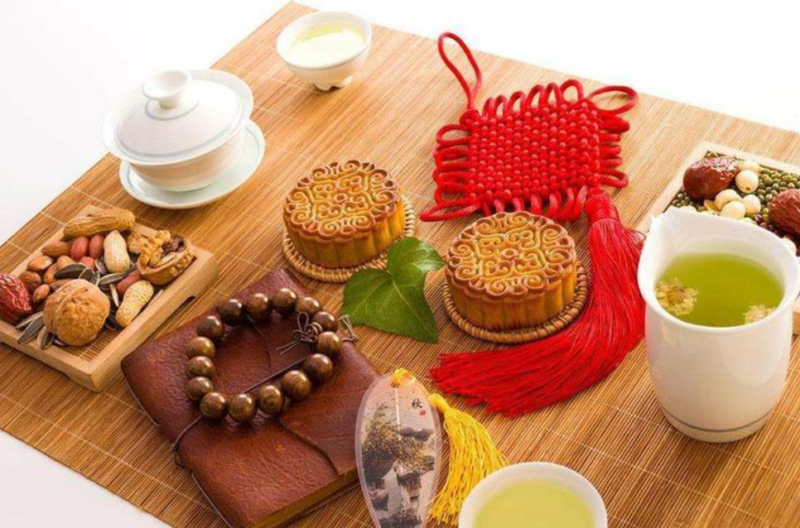


Among the numerous traditional festivals of the Chinese nation, the Mid-Autumn Festival centers on the theme of “reunion”, and mooncakes are the most vivid symbol of this theme. This round pastry is not only a delicacy on the tongue, but also embodies the ancients’ reverence for the moon and cherish for family ties. After thousands of years of precipitation, it has become a cultural symbol spanning regions and eras.
![图片[1]-Chinese Mooncakes - Mid-Autumn Festival Tradition, Types & Cultural Meaning](https://www.dgcity.com/wp-content/uploads/2026/01/image-150.png)
The origin of mooncakes can be traced back to the “Taishi Cake” in ancient times, which is said to be made in memory of Wen Zhong, the Taishi of the Shang Dynasty, and was initially a simple flour-based pastry. In the Han Dynasty, with Zhang Qian introducing sesame, walnuts and other ingredients from the Western Regions during his missions, the fillings of mooncakes gradually enriched, becoming a food with both practicality and ritual sense. In the Tang Dynasty, mooncakes began to be associated with the custom of appreciating the moon during the Mid-Autumn Festival. Literati often enjoyed mooncakes with wine and created many wonderful poems eulogizing the moon.
By the Song Dynasty, eating mooncakes during the Mid-Autumn Festival had become a common folk custom. At that time, the shape of mooncakes was similar to that of today. The round design symbolizes “the sky is round and the earth is square” and “reunion and perfection”, which is consistent with the theme of family reunion during the Mid-Autumn Festival. In the Ming and Qing Dynasties, the production process of mooncakes became increasingly sophisticated. All regions formed unique schools combining local flavors, gradually developing into the diverse pattern today.
There are many schools of Chinese mooncakes with different flavors, each hiding the local customs. Among them, Cantonese-style, Su-style, Beijing-style and Chaoshan-style mooncakes are known as the “Four Major Schools” and dominate the mainstream market. Cantonese-style mooncakes, produced in Guangdong, are famous for their thin crust and abundant fillings, with a soft and shiny crust made of inverted syrup. Classic fillings include lotus seed paste with salted egg yolk, red bean paste with salted egg yolk and five-nut blend. The sweet and salty flavor is deeply loved by the public. Today, innovative varieties such as lava custard and snow skin mooncakes have been derived, balancing tradition and fashion.
Su-style mooncakes are characterized by their crispy crust, made using the “water-oil dough layering” process, with layers of crispy outer skin. Most fillings are sweet, such as jujube paste, red bean paste and mixed fruits. Some savory Su-style mooncakes also add fresh meat and ham, offering a rich taste that reflects the delicacy of Jiangnan cuisine. Beijing-style mooncakes originated in Beijing, with a mellow and simple style, hard crust and fillings mainly including red bean paste, jujube paste and hawthorn. They are moderately sweet, not greasy or overly sweet, catering to the dietary preferences of northerners.
Chaoshan-style mooncakes have a strong Chaoshan flavor, with thin crusts, mostly sweet fillings, often combining mung bean paste or taro paste with lard, tasting sweet and glutinous. They are a perfect match with Chaoshan kung fu Tea. In addition to these four major schools, there are many characteristic mooncakes in various regions. For example, Yunnan ham mooncakes combine salty ham with sweet fillings, offering a pleasant sweet and salty taste; Sichuan spicy salt mooncakes, with a unique spicy flavor, show the boldness of Sichuan Cuisine.
![图片[2]-Chinese Mooncakes - Mid-Autumn Festival Tradition, Types & Cultural Meaning](https://www.dgcity.com/wp-content/uploads/2026/01/image-149.png)
For the Chinese people, mooncakes have long surpassed the nature of food and become an indispensable part of Mid-Autumn customs. On the night of the Mid-Autumn Festival, when the bright moon hangs high, families gather together, cut the mooncake symbolizing reunion, and each person takes a piece, implying “family reunion”. This ritual sense is an emotional expression deeply rooted in the Chinese people’s hearts – the round shape of mooncakes symbolizes “complete reunion”; the act of sharing conveys family affection and care.
In addition, mooncakes are often used as gifts for relatives and friends during the Mid-Autumn Festival. Exquisitely packaged mooncake gift boxes with diverse flavors carry people’s best wishes for each other and become an important link in maintaining interpersonal relationships. Today, with the development of the times, mooncakes continue to innovate while retaining their traditional core. Healthy mooncakes with low sugar and low fat, cross-border mooncakes integrating Western flavors, and exquisite cultural and creative mooncakes meet the needs of different groups of people. However, no matter how the form changes, the reunion Culture and Chinese aesthetics embodied in mooncakes have always been the most precious emotional sustenance in the hearts of the Chinese people. Tasting a mooncake, you can feel the strong atmosphere of the Mid-Autumn Festival; understanding mooncake culture, you can understand the Chinese people’s feelings of reunion.







暂无评论内容