

Walking through the streets and alleys of China, the first thing that captivates your senses is often the inviting aroma of street food. Rising sTeam carries a mix of savory, spicy, sweet and other flavors, lingering in the market smoke, making it the most vivid cultural symbol of Chinese cities. These seemingly ordinary snacks are not only delicious food to satisfy hunger, but also carry thousands of years of food Culture, regional characteristics and market warmth, serving as the best culinary key for foreign tourists to understand China.
![图片[1]-Chinese Street Food: A Guide to Must-Try Dishes and Cultural Stories](https://www.dgcity.com/wp-content/uploads/2026/01/image-109.png)
China is a vast country, and street food also presents distinct characteristics of “local flavors nurtured by local conditions”. The differences between the north and the south outline a rich culinary map. Street food in the north is mostly solid and mellow, providing both warmth and satisfaction. In the hutongs of Beijing, freshly made Ludagun (glutinous rice rolls with red bean paste) is coated with golden soybean flour. The soft glutinous rice and sweet red bean paste blend in the mouth, and each bite is the gentle taste of old Beijing. Tianjin’s Goubuli STeamed Buns exert the essence of “thin skin and big filling” to the extreme. The exquisite craftsmanship of eighteen folds, paired with delicious meat filling, overflows with soup when bitten, showing the delicacy of northern snacks. In Northeast China, the corn cakes baked next to the iron pot stew are the soul match. Crispy on the outside and tender on the inside, they absorb the deliciousness of the broth, and each bite is full of fireworks. Shandong’s multi-grain pancakes are famous for being fast and delicious. The crispy pancake skin is wrapped with eggs, fried dough twists and sauce, savory and delicious, making it the most popular breakfast choice on the street.
![图片[2]-Chinese Street Food: A Guide to Must-Try Dishes and Cultural Stories](https://www.dgcity.com/wp-content/uploads/2026/01/image-110.png)
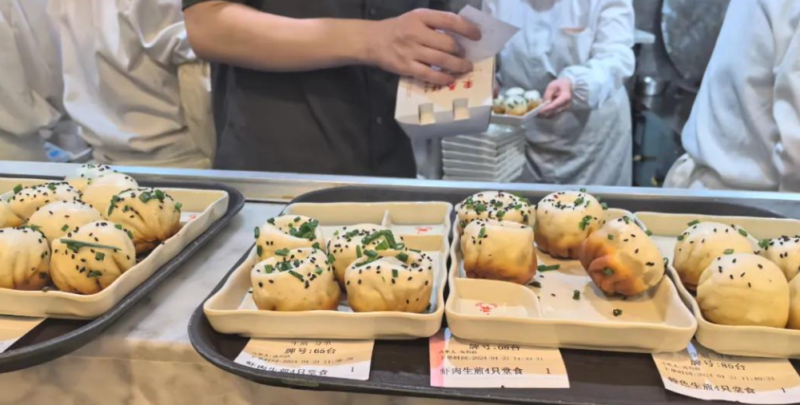
Street food in the south pays more attention to the layers and flexibility of flavors, showing a gentle style between sweet and salty. At the entrance of Shanghai’s lanes, Shengjian Bao (pan-fried buns) is an indispensable delicacy. The bottom is fried golden and crispy, and the top is sprinkled with green chopped green onions and sesame seeds. Bite a small opening to suck the soup first, then taste the tender meat filling. The sweet and salty taste is unforgettable. Hangzhou’s Congbao Hui (green onion pancake with fried dough) hides historical stories. Wrap the pancake and fried dough together and fry it, then serve with sweet noodle sauce and spicy sauce. The aroma is overwhelming, which is not only a street snack, but also a gentle commemoration of history. In Fujian, O Tsai Jian (oyster omelette) is made with fresh oysters, sweet potato starch and eggs. It is soft, glutinous and delicious. Drizzled with special sweet and spicy sauce, it shows the seafood flavor of southern Fujian.
When it comes to the strong and unique flavors, street food in Southwest China is absolutely impressive. On the streets of Chengdu, the aroma of Chuan Chuan Xiang (skewered hot pot) is everywhere. Various ingredients are skewered on bamboo sticks and boiled in boiling red oil pot. The spicy and delicious flavors blend together, paired with sesame oil and garlic sauce. The more you eat, the more addictive it is, which reflects Sichuan people’s ultimate pursuit of “spicy” and culinary wisdom. Chongqing’s Hot and Sour Noodles are famous for their “sour, spicy, numb, fresh and fragrant” flavors. The chewy sweet potato noodles are soaked in secret soup, paired with crushed peanuts, coriander and fried peas. One bite awakens the taste buds instantly. Yunnan’s Cross-Bridge Rice Noodles break the form of traditional street food. With boiling chicken soup as the base, raw meat slices, vegetables and rice noodles are added in turn. The ingredients are slowly cooked in the soup, which not only retains nutrition, but also shows the freshness and mellow taste of Yunnan cuisine.
In addition to regional flavors, Chinese street food also contains strong folk Culture and market warmth. In Xi’an, Rou Jia Mo (Chinese hamburger) is known as the “Chinese hamburger”. The preserved meat is stewed for a long time, soft and tasty, clamped in a crispy Baiji Mo (a kind of wheat cake). One bite is full of meat aroma. This snack is not only a daily food for Xi’an people, but also carries the culinary heritage of the ancient capital. In Guangzhou, morning Tea is seamlessly connected with street food. Small and exquisite snacks such as shrimp dumplings, shaomai and rice rolls are paired with tea, becoming a microcosm of Guangzhou people’s slow life, allowing tourists to immerse themselves in Lingnan Culture. On festivals, street food will also take on a “festival limited” look. Glutinous rice balls for the Lantern Festival, zongzi for the Dragon Boat Festival and mooncakes for the Mid-Autumn Festival are not only a culinary enjoyment, but also a inheritance of traditional culture.
![图片[3]-Chinese Street Food: A Guide to Must-Try Dishes and Cultural Stories](https://www.dgcity.com/wp-content/uploads/2026/01/image-111.png)
For foreign tourists, tasting Chinese street food is not only a culinary adventure, but also an experience of deepening into the market life. In front of the roadside stalls, watching the vendors make food skillfully, listening to the loud shouts, and queuing up with local residents, this kind of fireworks is irreplaceable by five-star restaurants. From the mellow taste of the north to the flexibility of the south, from the strong flavor of the southwest to the freshness of the southeast, Chinese street food shows China’s culinary charm and human warmth to the world with its diverse flavors, profound culture and warm market atmosphere. Why not slow down, walk into the streets and alleys of China, and let each bite of snack become a code to unlock Chinese culture.











暂无评论内容