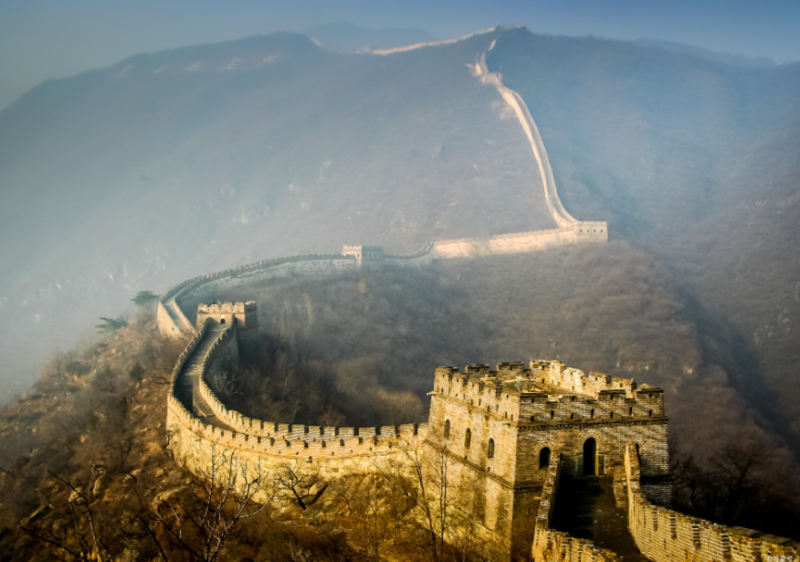


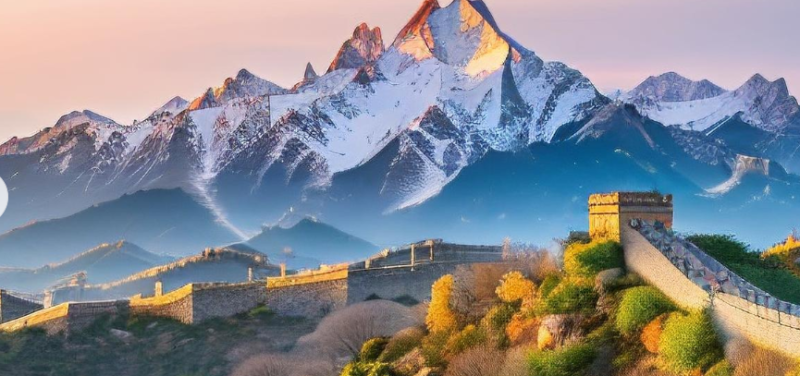
Amidst the lofty mountains and rolling hills of China, there winds a giant dragon stretching for thousands of miles. It is not only the symbol of China but also one of the most magnificent architectural wonders in the history of human civilization – The Great Wall. From Shanhaiguan Pass on the Bohai Sea Coast to Jiayuguan Pass deep in the Gobi Desert, the Great Wall spans 15 provinces, municipalities, and autonomous regions, with a total length exceeding 21,000 kilometers. Having endured more than 2,000 years of wind and rain, it still stands firm, telling the world the wisdom and perseverance of the Chinese nation.
![图片[1]-The Great Wall of China - World Cultural Heritage, History & Travel Guide](https://www.dgcity.com/wp-content/uploads/2026/01/image-155.png)
The construction of The Great Wall began during the Spring and Autumn and Warring States Periods, initially as a military defense project built by various states to resist the invasion of nomadic tribes. After Emperor Qin Shi Huang unified the six states, he connected and renovated the scattered sections of the Great Wall built by different states, forming the prototype of the “Ten-Thousand-Li Great Wall”. In the subsequent Han and Ming dynasties, the Great Wall was continuously expanded and reinforced. Especially in the Ming Dynasty, large-scale renovation and extension were carried out on the Great Wall. Most of the Great Wall sections we see today are relics from the Ming Dynasty. It is not a single city wall but a complete military defense system composed of city walls, passes, beacon towers, and watchtowers. The average height of the city wall is 7.8 meters, and the top width is 5.8 meters, which can accommodate five horses walking side by side or ten people standing in a line. It is exquisitely designed, combining defensiveness and practicality.
![图片[2]-The Great Wall of China - World Cultural Heritage, History & Travel Guide](https://www.dgcity.com/wp-content/uploads/2026/01/image-153-1024x549.png)
Walking on The Great Wall, every blue brick is inscribed with the marks of history. As an important communication facility, beacon towers once played a key role in ancient wars – smoking during the day and lighting fires at night, the signals could spread along the thousands-of-miles defense line in a short time, becoming the “information superhighway” of the ancient times. Passes are the vital points of the Great Wall. For example, Shanhaiguan Pass, known as “the First Pass Under Heaven”, guards the Liaoxi Corridor and has witnessed countless dynastic changes and ethnic integration; Juyongguan Pass is strategically located among towering mountains and overlapping peaks, and “Juyong Diecui” (Layered Greenery at Juyong) is listed as one of the Eight Scenic Spots of Yanjing, where natural and cultural landscapes complement each other.
The Great Wall is not only a military project but also a symbol of the spirit of the Chinese nation. It carries the ancient people’s yearning for peace and condenses the wisdom and sweat of countless craftsmen. During the construction process, relying on simple tools, the ancient people chiseled rocks, built walls with bricks on steep cliffs and Gobi deserts, creating a miracle in the history of human architecture. For thousands of years, the Great Wall has witnessed the migration and integration of nations, wars and peace, and has become a spiritual link connecting all ethnic groups in China. Today, the Great Wall is no longer a military defense line but a world-famous tourist attraction, attracting tens of millions of Chinese and foreign tourists every year to pay homage and feel its grandeur and solemnity.
![图片[3]-The Great Wall of China - World Cultural Heritage, History & Travel Guide](https://www.dgcity.com/wp-content/uploads/2026/01/image-154.png)
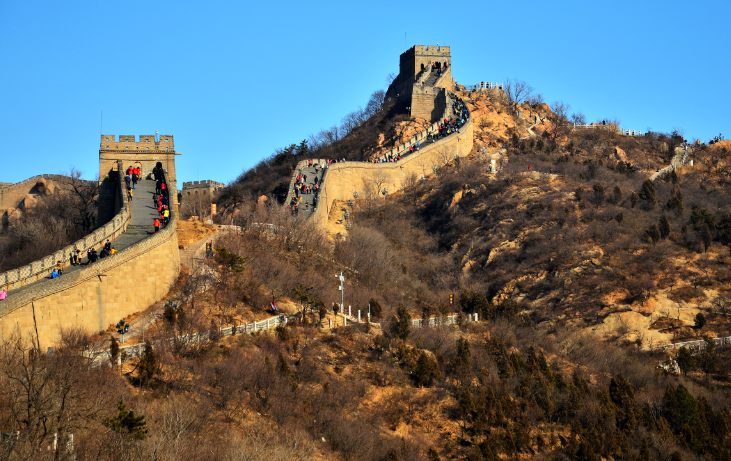
Visiting the Great Wall offers different experiences in different sections. Badaling Great Wall is easily accessible with complete facilities, making it one of the most representative sections. Its regular city walls and broad view are suitable for family trips; Mutianyu Great Wall is covered with dense vegetation and boasts different scenery in four seasons – blooming flowers in spring, lush green in summer, colorful forests in autumn, and snow-covered scenery in winter, known as “the Most Beautiful Great Wall”; Simatai Great Wall retains its original style, with steep and dangerous city walls full of wild charm, making it the first choice for adventure enthusiasts. No matter which section you choose, when you climb high and look far, watching the dragon-like Great Wall winding among the mountains, you can deeply feel the profoundness and breadth of Chinese civilization.
As a World Cultural Heritage, the Great Wall belongs not only to China but also to the whole world. It is a precious cultural treasure of humanity, witnessing the development and progress of human civilization. Coming to China and climbing the Great Wall, you can not only enjoy the magnificent architectural scenery but also understand the spiritual code of the Chinese nation – “self-improvement and unity”. This is the most precious gift that the Great Wall has left to the world.


暂无评论内容